
Reading Tarot – “Good” cards VS “Bad” cards
Are they all just lessons?
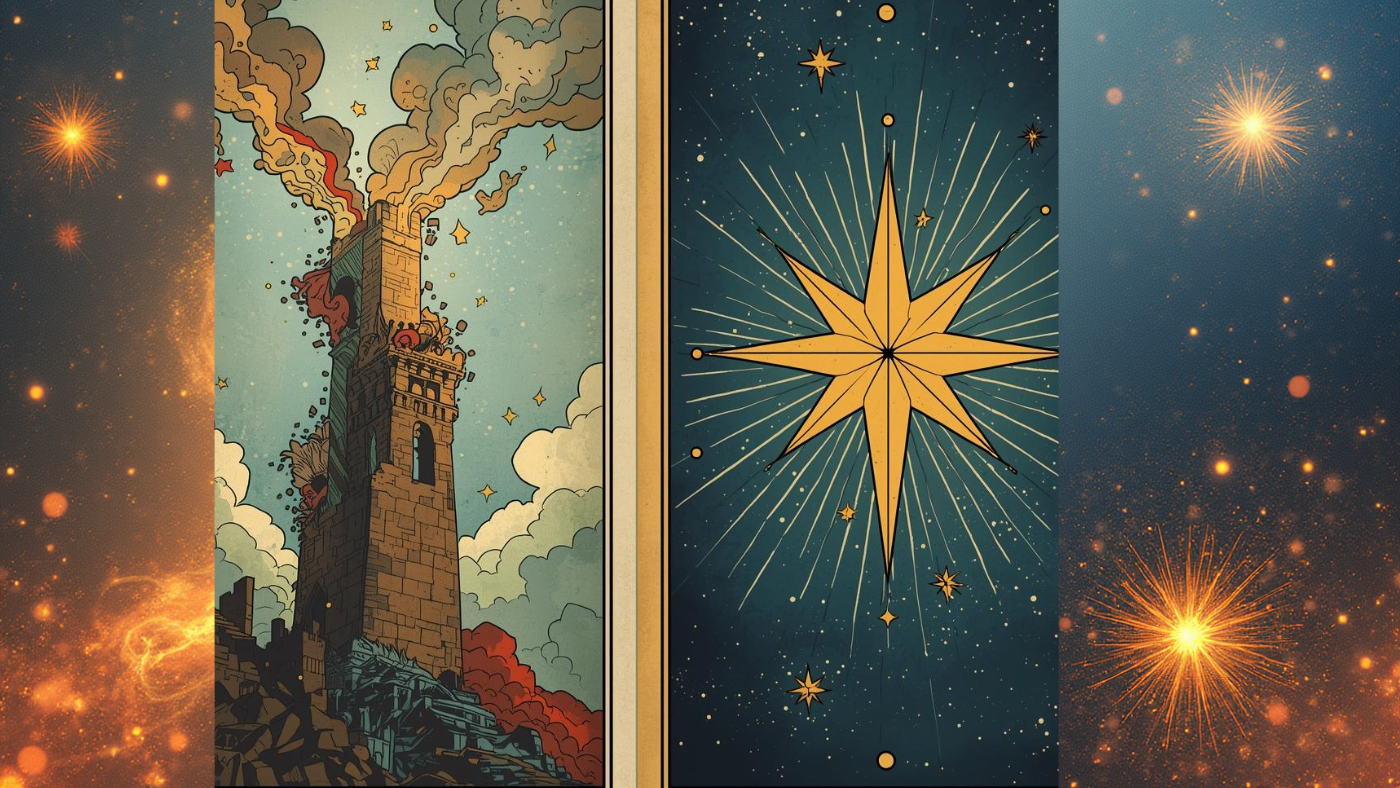
When I read tarot, I can still catch myself falling into the trap of oh no, that’s a bad card or feeling relieved when I pull a good one.
So let’s name the belief first.
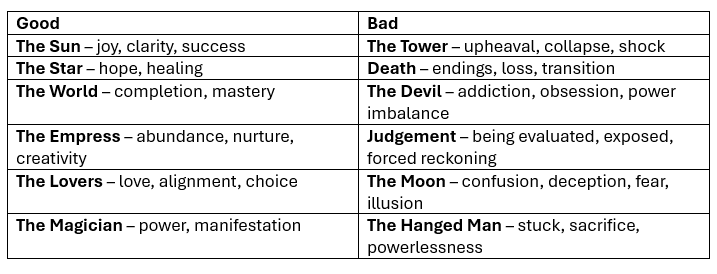
I’ll start with a short list of cards that are commonly labeled “good” or “bad” and then turn the whole thing on its head.
Because tarot doesn’t deal in good or bad.
Tarot is a teacher.
It connects you to your energy and the direction it’s moving. Labeling cards as positive or negative limits interpretation and flattens meaning.
Common Interpretations About “Good” and “Bad” Major Arcana Cards
This binary thinking:
flattens nuance
discourages learning
creates fear-based readings
turns tarot into emotional gambling
takes away your choice
Pressure vs Flow
Some cards show pressure.
Pressure creates discomfort, fear, grief, rupture, tension.
But pressure is also what forces movement, truth, and change.
Some cards show flow.
Flow feels good. It reassures. It stabilizes. It expands.
But flow can also lull you into complacency or avoidance.
Neither is moral. Neither is punishment or reward.
Why “bad cards” scare us
The Tower doesn’t show destruction for fun. It shows structures that were already unstable. Beliefs that couldn’t hold. Situations that required force because subtlety failed. The Tower is telling you that you need to pay attention, don’t bury your head in the sand.
Swords don’t exist to torment you. They represent the mind. Thoughts. Stories we tell ourselves.
When Swords hurt, it’s usually because a truth is trying to cut through denial. I often read Swords as anxiety around a situation. Anxiety is worrying about what might happen rather than what is happening. It pulls you out of the present moment. These are lessons that remind you to pay attention and step into your own power, accept accountability and grow. They can be painful, but they are never meaningless.
Why “good cards” can mislead us
The Magician feels powerful. Confident. Capable.
But you need to answer the question:
What are you doing with the tools you already have?
Because potential without action is just a performance.
The real shift: from judgment to lesson
When you stop asking, Is this card good or bad?
and start asking,
What is this teaching me right now?
Everything changes.
The Tower asks: What am I clinging to that’s already cracking?
Swords ask: What truth am I avoiding? What story needs to be challenged?
The Ace of Pentacles asks: What am I willing to commit to?
The Magician asks: Am I using my power intentionally or just admiring it?
Tarot doesn’t predict rewards or punishments.
It mirrors patterns.
Highlights energy.
Invites awareness.
And awareness is never good or bad.
It’s useful.
That’s where real insight lives.
A Different Way to Ask the Question
Instead of asking “Is this a bad card?”
Ask:
What energy is being applied here?
Where is life applying pressure vs offering support?
What would happen if I resisted this energy?
What would happen if I worked with it?
Suddenly:
The Tower becomes a path to realignment
The 10 of Swords becomes an ending that stops a harmful cycle
The 5 of Pentacles exposes where support is missing
The Devil reveals unconscious attachment
And:
The Sun restores clarity
The Star allows healing
The Ace of Pentacles asks for commitment
The Magician expects responsibility
Whichever card you pull, they are all sending a message and asking you to participate. You never lose your free will. How will you participate?
